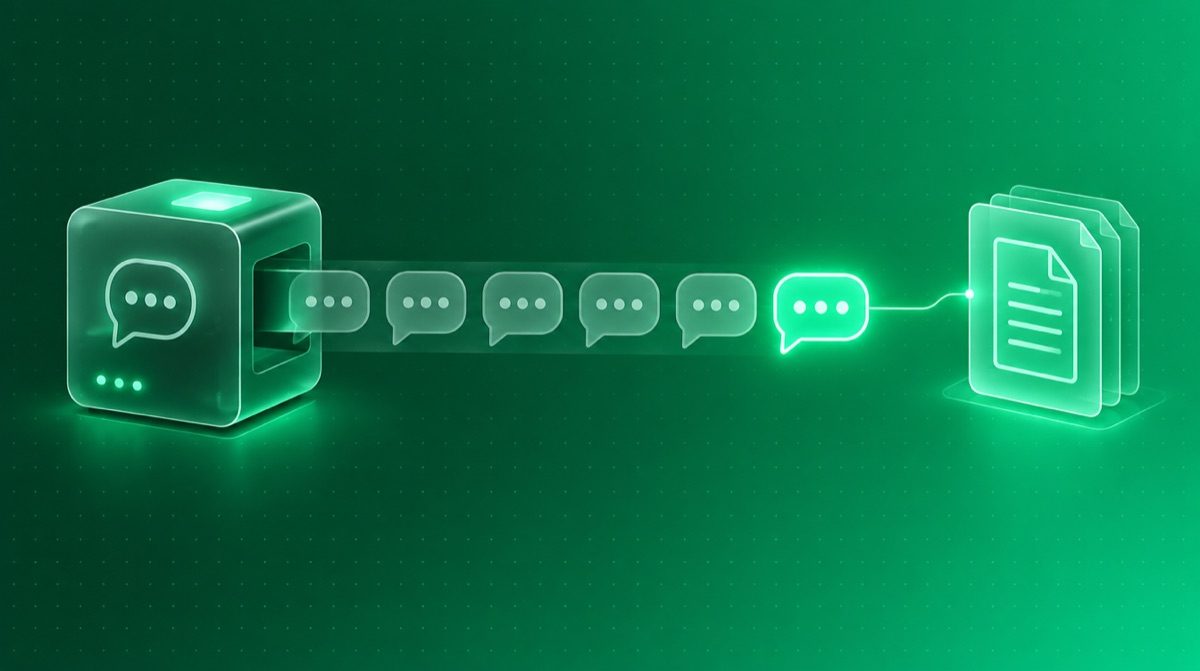
Companies that say they tried AI and “it did not work” are almost always describing the first version: a chat window where you type a question and get a polite answer that would suit anyone. That is exactly the expected behaviour of a model holding no information about you.
Chatbot
Knows nothing about you
- Answers exactly what you asked
- Polite and correct
- Identical for everyone who asks
- Asks you for the context every time
Context plus permissions
Colleague
Has the company memory
- Knows the clients and their history
- Knows the offer and the prices
- Knows what you already promised
- Does the work instead of asking
The two things that make the difference
The first is information: the company's documents, somewhere it reads every time. The second is permission: the right to look at a calendar, open a file, prepare a draft. Without the first it answers generically. Without the second it answers well but cannot act on anything it understood.
A new colleague gets the documents and the access on day one. An AI assistant usually gets neither.
Terms used here
- Permission
- What the agent is allowed to touch. Granted in stages: read first, then draft, then act.
- Onboarding
- The process of giving a new colleague context and access. It applies identically to an agent.
Where to start
- 1Write down what you would tell a new colleague on day one. That is the context.
- 2List the access you would give them. Those are the permissions.
- 3Grant the first, then the second, in that order and not the other way round.